
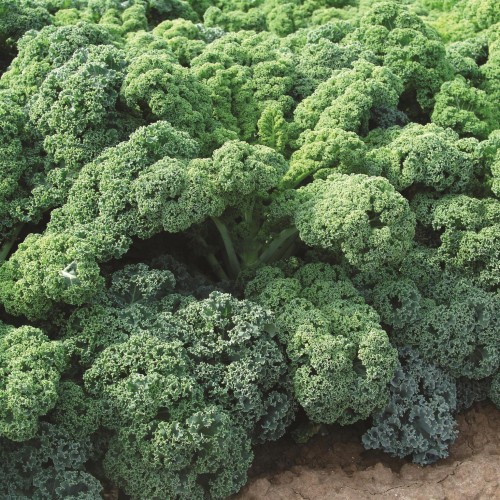
Description
SCIENTIFIC NAME:
Brassica oleracea
CULTURE:
Kale prefers a fertile, well-drained soil high in organic matter with a pH range of 6.0–7.5. Consistent moisture will produce the highest-quality leaves. For baby-leaf production, see the Baby Leaf Brassica Greens culture.
DAYS TO MATURITY:
From direct seeding; subtract about 14 days for days to maturity from transplant.
DIRECT SEEDING:
Plant from early spring to approximately 3 months before expected fall frost. For bunching: Sow 3–4 seeds every 30-45 cm, 0,6 cm deep, in rows 45-90 cm apart. Thin to 1 plant per group.
EARLY SPRING CROP:
Use varieties suited to warm-season production. Sow 2 seeds per cell in 50- to 72-cell plug flats, 3 seeds/ 2 cm. in 20-row flats; or, in outdoor beds 0,6 cm deep. Seedlings should be ready to transplant in 4–6 weeks. If possible, keep soil temperature over 24°C until germination, then reduce air temperature to about 16°C. Transplant outdoors 30-45 cm apart in rows 45-90 cm apart. Kale prefers cooler growing temperatures, between 13–24°C, optimum being 16–21°C, but will produce good crops under warmer, summer conditions.
FALL CROP:
Start seedlings as above in May and transplant to the garden in June–July. To ensure mature heads, seed the crop early in areas where heavy freezes occur early in fall.
WINTER CROP:
Successful kale crops can be grown where winters are mild and temperatures rarely fall below 0°C. Transplants can be set out from September to February in these regions.
DISEASES:
Adhere strictly to a preventive program including: (1) long crop rotations with non-brassica crops, (2) clean starting mixes and outdoor seedbeds, and (3) strict sanitation practices.
INSECT PESTS:
Kale is not as afflicted with pests as are other brassica crops such as cabbage. Apply insect net at the time of planting to exclude pests from the crop. Control cabbage worms and loopers with Bacillus thuringiensis (Bt).
HARVEST:
Beginning about 2 months after planting, harvest by clipping individual leaves. Kale is very hardy, and the eating quality will improve into the late fall with light frost. Late-summer sown or planted collards can be wintered in cold frames or hoophouses, or in the open in mild regions, to extend the season. Protecting with row covers can extend the harvest period.




Reviews
There are no reviews yet.