
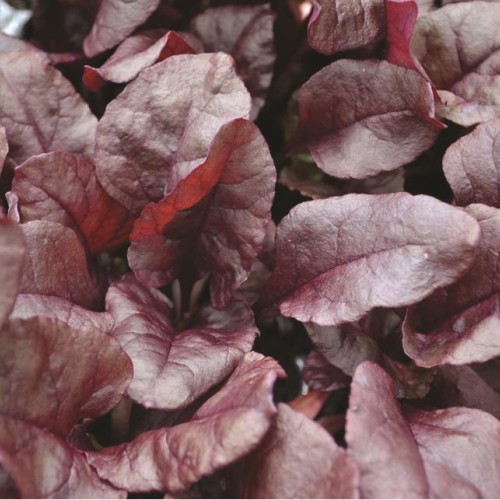
Description
SCIENTIFIC NAME:
Beta vulgaris
CULTURE:
First-rate crops grow quickly in light or loamy soils with a pH over 6.0. In general, cool temperatures produce the best flesh color. Acute weather fluctuations will cause zoning (white rings) in the roots. Baby-leaf greens can be grown throughout the season.
TRANSPLANTING:
Sow seed in a cold frame or indoors in early spring, about 5–6 weeks before transplanting out after heavy frosts become infrequent. Sow 1,2 cm deep, 2–3 seeds per cell in 72- or 128-cell flats. Transplant 7,5 cm apart in rows 30-45 cm apart. Beets transplanted using this method may not be as uniform as direct-seeded beets, and taproots will tangle, requiring the harvester to gently pull out the root while holding back the rest. However, transplanted beets can bring earlier harvests if poor weather conditions persist and interfere with direct seeding.
DIRECT SEEDING:
Baby Leaf: Sow 0,6– 1,2 cm deep at 1–2 seeds/inch in rows at least 5 cm apart from midspring into late summer (fall where winter is mild). Planting too densely can lead to overcrowding and stunted growth. When planting more seeds/inch, be sure to plant rows farther than 5 cm apart.
DISEASES:
Keep beets well-irrigated to prevent scab, the same disorder that affects potatoes, causing raised brown rough spots on the mature roots. Internal breakdown or browning is most likely to occur in alkaline soils after prolonged hot, dry periods. This is caused by a boron deficiency. Rotate crops to prevent Cercospora leaf spot, which is especially important for bunching and baby-leaf beets.
HARVEST AND STORAGE:
Baby Leaf: Harvest with a knife when leaves reach desired size, about 7,5-15 cm. Cut about an inch above the soil to allow for clean regrowth, making sure to cut above the basal plate. Cut again when leaves are at desired size (5–14 days, depending on variety).





Reviews
There are no reviews yet.