
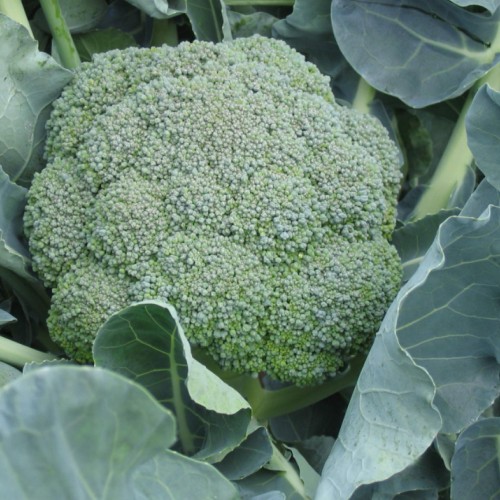
Description
SCIENTIFIC NAME:
Brassica oleracea
CULTURE:
Broccoli prefers a well-drained, fertile soil that is high in organic matter with a pH of 6.0–7.5. A consistent supply of moisture throughout the growing season is important; irrigate regularly for best results. While more heat-tolerant varieties are now on the market, broccoli does not generally do well in hot weather. The best success is with spring and fall crops.
EARLY SPRING CROP:
Use early and midseason varieties. Sow 2 seeds per cell in 72-cell plug flats, 3–4 seeds/2,5 cm . in 20 row flats, or in outdoor beds 0,6 cm deep. Seedlings should be ready to transplant in 3–4 weeks. If possible keep soil temperature 24–27°C until germination, then reduce air temperature to about 16°C. Ensure good air circulation and light. Transplant outdoors 25-45 cm apart in rows 45-90 cm apart. Broccoli prefers cooler growing temperatures, between 13–24°C, optimum being 16–21°C, but will produce good crops under warmer, summer conditions.
FALL CROP:
Use midseason and storage varieties. Start seedlings as above in May and transplant to the garden in June–July. To ensure mature heads, seed the crop early in areas where heavy freezes occur early in fall.
WINTER CROP:
Successful broccoli crops can be grown where winters are mild (temperatures rarely below 0°C. Transplants can be set out from September to February in these regions.
DIRECT SEEDING:
Sow 3 seeds per foot, 1,2 cm deep, rows 4-90 cm apart, thinning to one plant in each group.
DISEASES:
Adhere strictly to a preventive program including: (1) long crop rotations with non-brassica crops, (2) clean starting mixes and outdoor seedbeds, and (3) strict sanitation practices.
INSECT PESTS:
Repel flea beetles and root maggots on young seedlings by covering with insect net from day of planting. For cabbage worms and loopers, use Bacillus thuringiensis. Cutworm prevention: Cultivate soil 2–4 weeks before planting to work in cover crops and destroy weeds.
HARVEST:
Before flower buds open, cut center head. Hydrocool or ice as soon as possible. Harvest secondary side shoots regularly to encourage continued production.
STORAGE:
Store at 0°C, 95–98% relative humidity, with good air circulation for 10–14 days.




Reviews
There are no reviews yet.