
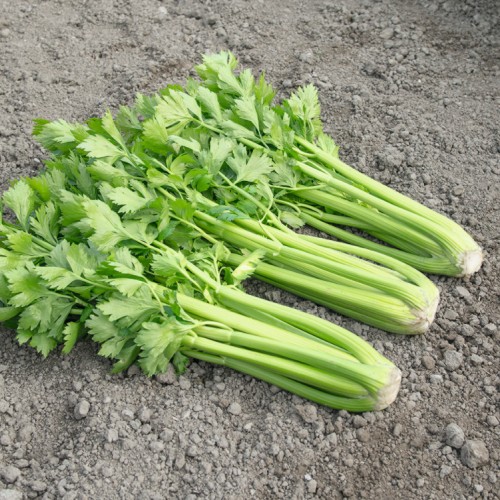
Description
CULTURE:
Celeriac requires a fertile soil with a pH range of 6.0–7.0. Do not let the soil dry out, indoors or out. This crop needs a consistent supply of moisture throughout the season for optimum flavor and yield.
GROWING SEEDLINGS:
Sow in trays 10–12 weeks before transplanting outdoors. Sow 1 seed / 0,5 cm, 0,6 cm deep, in 20-row, open flats, or plug trays. Keep soil moist and temperatures 21–24°C if possible. Seedlings emerge in 2–3 weeks and then temperature can be reduced to 16–21°C.
TRANSPLANTING:
When seedlings have 2 true leaves, transplant to 72-cell plug trays. Transplant outdoors when weather is warm and settled. Set plants 15-20 cm apart in rows 60-90 cm apart. Irrigate to keep soil moist. There is risk of plants bolting to seed if they are set out when daytime temperatures are consistently below 13°C.
BOLTING:
Caused by exposure of young plants to temperatures below 13°C for 10 days or more. When hardening plants before transplanting out, reduce water for 7–10 days. Do not harden off celery plants by lowering temperatures!
DISEASES AND PESTS:
For leaf blights, rotate crops. Ensure adequate soil calcium and water to prevent black heart.
HARVEST:
Cut stalks when they are of edible size. Stalks may be blanched if desired by hilling up with soil or by placing paper collars around plants.
STORAGE:
After harvest remove field heat by dunking plants in cold water. Store sound heads/roots at 0°C with 98–100% relative humidity. Celery will store for 1–2 months. CAUTION: In rare instances contact with the foliage can result in a severe rash. When working with this crop on hot, sunny days, we recommend wearing long sleeves and long pants and washing any exposed skin surfaces as soon as possible after contact.




Reviews
There are no reviews yet.