
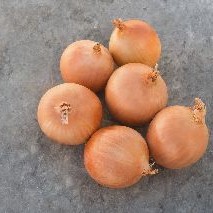
Description
SCIENTIFIC NAME:
Allium cepa
CULTURE:
Onions require full sun and fertile, well-drained soil with a pH of 6.0–7.0. Sandy loam soils are ideal; in heavier soils, use raised beds or raised rows to promote soil drainage.
DIRECT SEEDING:
In April or early May, or as soon as the soil can be prepared in early spring, sow in a 2″ wide band, about 2 seeds/in., 0,6-1,2 cm deep, rows 12–18″ apart. Thin to 3-5 cm apart for highest yields in fertile soil. Thin to 7-10 apart for larger onions.
TRANSPLANTING:
In short-season areas, sow seeds indoors in flats in late February to mid-March. Broadcast 1,2 cm apart and cover 0,6 cm. Tops may be clipped to 12 cm tall. Transplant to the garden 10 cm apart, or sow 5 seeds in each cell of 2,5-3,5 cm diameter plug trays, thinning to 3 per cell. Transplant each cell 15 cm apart.
CULTIVATION:
Keep onions well weeded with shallow cultivation.
WATER:
Onions are shallow-rooted and grow best with at least 2,5 cm per week of rain or irrigation, especially during the bulbing phase.
DISEASES:
Adequate air circulation and crop rotation aids in reducing the risk of foliar disease.
HARVEST:
When necks become soft and tops are falling over, pull and sun-cure at least 2–7 days, depending on weather. Move to a protected location to finish drying.
STORAGE:
When dry, clip off tops and roots and store in onion bags or shallow boxes at near freezing and 65–70% humidity.




Reviews
There are no reviews yet.